
Our Expertise
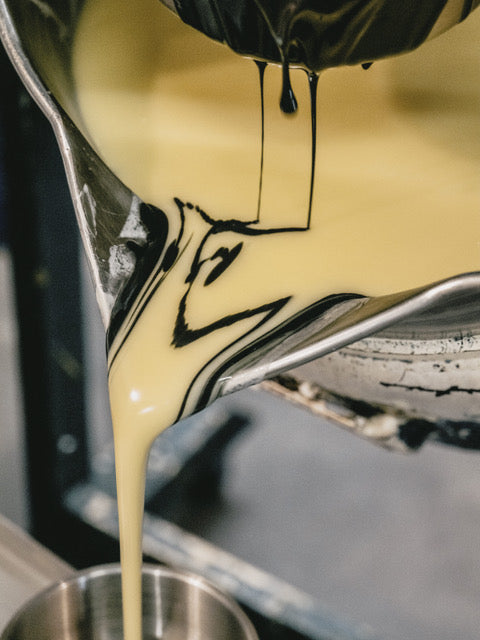
Cold process soap making
Soap made using the "cold process" method is much gentler on your skin than industrially manufactured soap, and here's why:
First, thanks to the exothermic saponification reaction, which does not exceed 40°C (meaning no cooking), the oils, thus preserved, and the lye are completely transformed into soap and natural glycerin. In industrial processes, glycerin, a moisturizing product with commercial value, is extracted from the soap and sold separately. In cold-process soap, glycerin (8 to 9%) remains present. This is what makes this type of soap softer, more moisturizing, and emollient. Furthermore, at the end of the manufacturing process at Route Mandarine, approximately 5% of noble organic vegetable oil (argan oil, avocado oil, cocoa butter, or mango butter, etc.) is added. Since this oil is not saponified, it remains present in the soap to enrich it, thus contributing to softening and moisturizing the skin. The result is a natural "superfatted" soap. This is why after using handmade, cold-process soap, you won't experience the tightness and dryness that often accompany the use of industrial soap.

Finally, it can be added that the environmental impact of this manufacturing process is nil. Very little energy consumption, no waste discharged. Today, we can no longer ignore this!
The 4 Main Types of Soapmaking:
-

Cold process soap
Our cold process soapsCold process soap (CPS), an ancient Anglo-Saxon method, rediscovered for the quality of the soap it produces. A natural soap that reassures and seduces with the comfort it provides and the naturalness of its ingredients.
-

Hot Process Soap
Hot-processed soap, like Marseille or Aleppo soap, from which the glycerin, extracted during cooking, is often resold to the cosmetic industry.
-

Sugar crystals
Soap made from "bondillons," industrial soap pellets of varying quality, often imported from far away to be produced as cheaply as possible. Sometimes made from animal fats or palm oil from Malaysia and Indonesia. This base must be reprocessed in a machine (bondillon processor) to be enriched, colored, and fragranced, and finally cut into "pretty" soaps of various shapes.
-

Melt and Pour
"Melt and pour" soap is literally "melt and pour into a mould". It's the type given to little girls to make their own creations. It's a ready-made base that you melt by heating it, then colour and scent it. It's often transparent and always extremely chemical.


